©

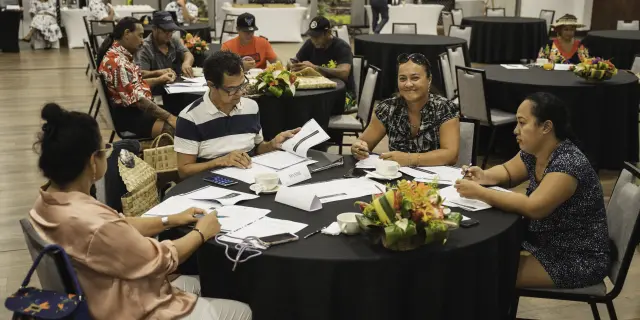
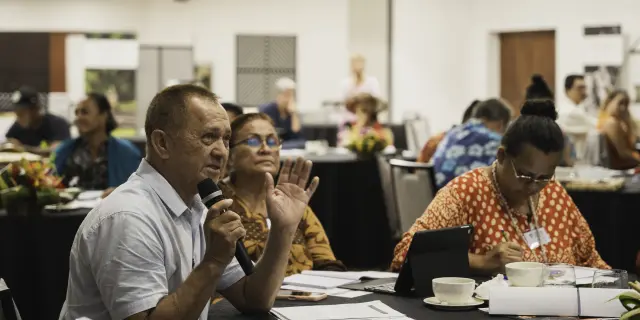
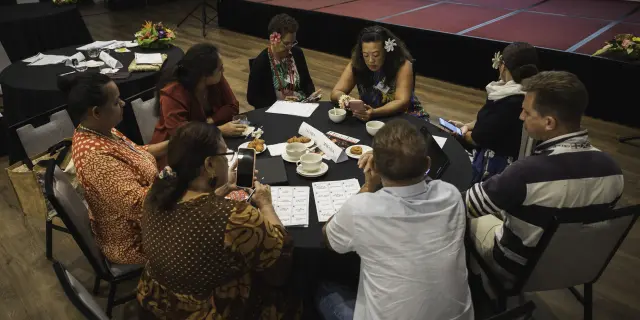
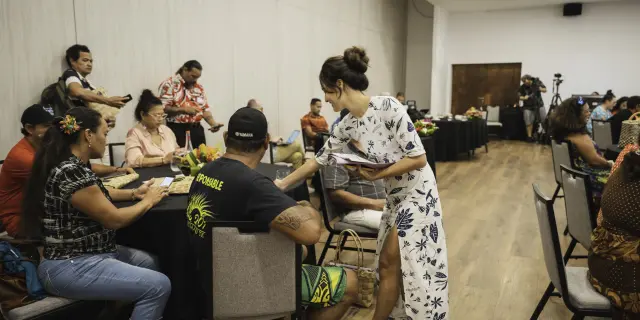
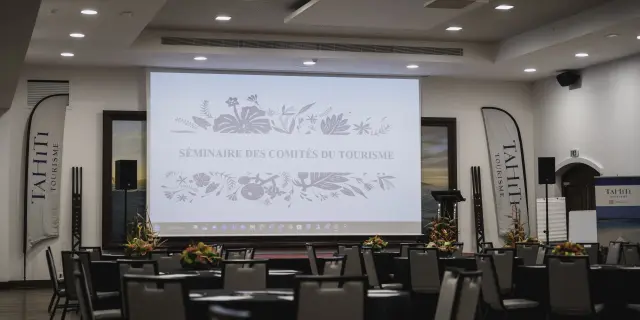
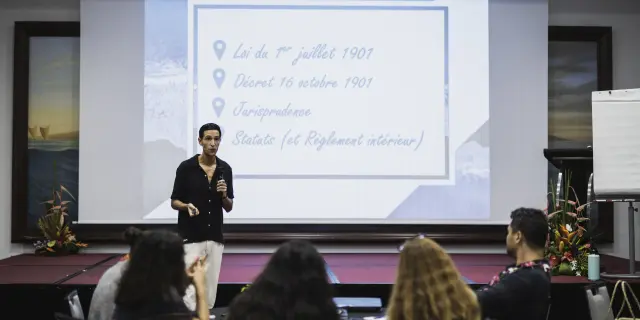
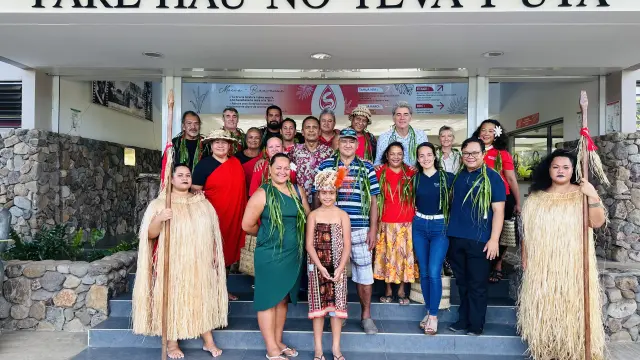
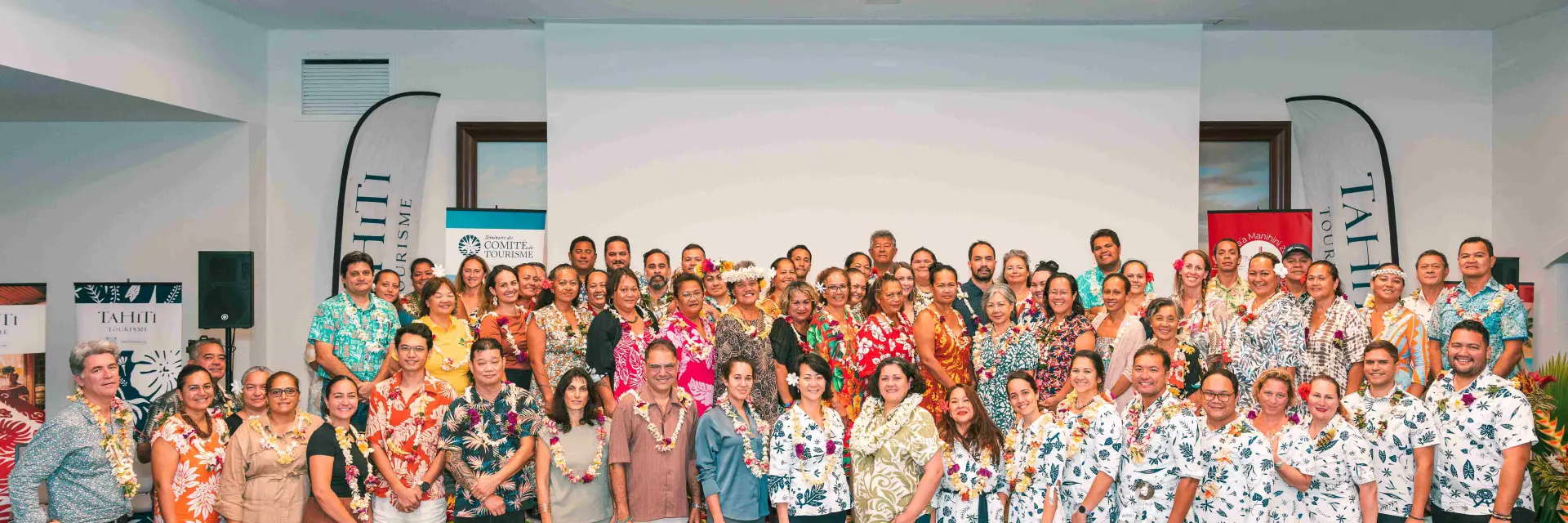
J1 Group Photo Tourism Committee Seminar September 2025

You are a

Tourism Committee

The tourist boards play an essential role in promoting and developing tourism in the archipelagos of French Polynesia. Acting as local intermediaries, they support local initiatives and service providers and help to promote the destination to visitors.

Tourism committees

An essential link in the development of tourism

As part of the implementation of the sustainable tourism strategy, Fāri’ira’a Manihini 2027 (FM27), the Country has established measures to strengthen its actions with local tourism stakeholders, including tourism committees.

A tourism committee is an association that brings together and assists the tourism stakeholders of a municipality or island. It distributes tourist information within its area of competence (promotion of local professionals, places not to be missed, events not to be missed, etc.).

On some islands, the tourist committee even organises events and livens up the island’s tourist life. Some also manage cruise ship arrivals (an average of 800 per year). They also educate the local population about welcoming visitors and developing tourism.

Tahiti Tourisme has been supporting the committees for many years, helping them to structure, professionalise and roll out public tourism policy. The development of the tourism committees should enable them to become true relays for Tahiti Tourisme and the deployment of the tourism development strategy with local players.

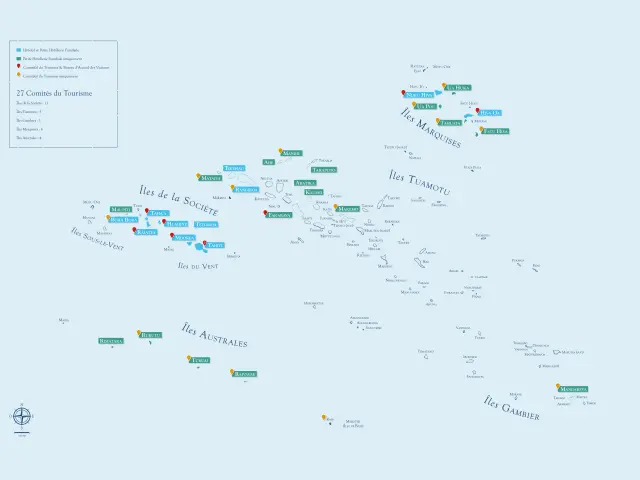
They have an essential role to play since, spread over some thirty islands, they are in direct contact with tourism professionals and the population of the archipelagos and remote islands, which encourages and helps to develop this notion of inclusiveness.

A 5-year structuring and professionalisation plan

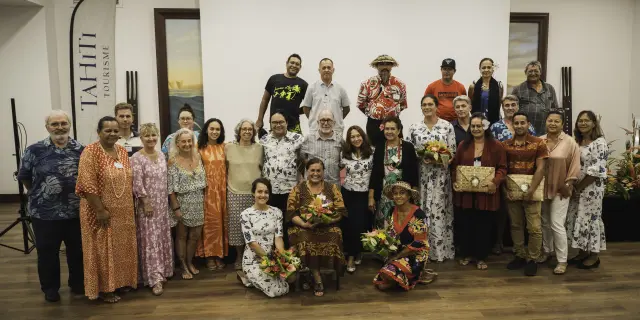
In 2022, the country will approve a five-year plan to structure and professionalise the Tourism Committees. Supported by the President’s Office and the Tourism Department, Tahiti Tourisme is assisting them on a daily basis with the help of a dedicated team. This support, which stems from the FM27 strategy, takes place in 4 stages:

Tourist boards are associations made up of volunteers who are invested in and committed to tourism in their region. At this level, Tahiti Tourisme’s role is to encourage their approach and help them adopt good practices in terms of sustainable tourism, associative life, management, accounting and legal compliance, among others.

This stage consists of a number of exchanges between the Tourism Committee and Tahiti Tourisme, with the aim of presenting the country’s tourism vision for the Tourism Committees (preliminary studies, the law governing the country, regulatory statutes, etc.) and getting to know the committee (its history, missions, operations, etc.). Finally, the committee is made aware of the need for accreditation and adopts the regulatory statutes in order to move on to the recognition/accreditation phase.

  • Do you have to be in Tahiti to take part in the upgrade?

    You do not need to be in Tahiti. Discussions can be conducted remotely by telephone, email or videoconference. If you are travelling to Tahiti, don’t hesitate to come and meet the team. Don’t hesitate to contact the team in charge of the Tourism Committees at Tahiti Tourisme to get started right away.

Committee structure

The tourism committees are bodies governed by private law, holding a licence, constituted in the form of associations governed by the law of 1901, domiciled in the place where they carry out their activity, and whose articles of association comply with the reference model determined by order of the Council of Ministers.

Their purpose is to inspire, relay and participate in the implementation of the country’s tourism policy within the framework of the missions mentioned below and carried out within the geographical area in which they operate.

With the exception of the island of Tahiti, only one tourism committee may be approved per island.

  • The categories

    The tourist boards are classified into three categories, each with a different name to reflect the scope of the tasks entrusted to them:

    1. The ” Destination Relays ” are located on the most popular tourist islands in French Polynesia and have both premises and trained staff. In addition to their compulsory tasks, their main role is to welcome and inform tourists on an ongoing basis;
    2. Developers ” are located on islands where tourism is currently being developed. In addition to their compulsory duties, their role is to propose and relay initiatives designed to boost tourism development;
    3. Local coordinators ” are located on islands (or communes in the case of Tahiti) where there is a desire to develop tourism, but where tourism is still in its infancy. Their missions are determined by their approval, according to their level of tourism development.
  • The missions

    Mandatory tasks:

    • Coordinating and assisting tourism stakeholders;
    • Actions to promote sustainable and eco-responsible tourism;
    • Raising awareness among the local population of the importance of hospitality and sustainable tourism development;
    • Management and distribution of tourism documentation.

    Optional tasks:

    • Organising and running events;
    • Management and development of tourist sites;
    • Reception of cruise ships;
    • Permanent reception;
    • Marketing the destination ;
    • Marketing tourism products;
    • Professionalisation of the tourism industry;
    • At the request of the Tourism Department, expressing an opinion on applications for public aid in the tourism sector granted by French Polynesia.

    The tasks of the tourism committees are limited to the geographical area for which they are approved.

The Tourist Board submits an application for approval by the local authority. The application is examined by the Tourism Committee Approval Advisory Committee, which may approve it in one of the 3 existing Tourism Committee categories: Destination Relay, Developer or Local Animator. Once it has been approved, the Tourism Committee officially becomes the Pays’ intermediary in its area and a point of contact between the Pays and local tourism stakeholders. In order to carry out the tasks entrusted to it, a professionalisation programme has been developed.

  • How to obtain approval

    The process is simple: the committee fills in the application form and attaches the supporting documents requested. Once the application is complete, the committee can send it to the Tahiti Tourisme team dedicated to Tourist Committees:

    • by email: comites@TahitiTourisme.org
    • at Fare Manihini :
      Gare maritime – 2nd floor
      BP 65, 98713 Papeete – Tahiti – French Polynesia

    It is important to note that only one Tourist Board can be approved per island, with the exception of Tahiti. The Comité du Tourisme team will be happy to help you with this process.

    this process.

  • Who grants approval?

    As soon as confirmation of receipt of the complete application for approval is received, the CCACT (Commission Consultative d’Agrément des Comités du Tourisme) meets within one month to study the application and, if necessary, to define the category of the committee in question. The Commission’s opinion is then forwarded to the President of French Polynesia for a final decision. This commission is made up of the following entities:

    • The President of French Polynesia, in charge of Tourism,
    • The Tourism Department,
    • Tahiti Tourisme,
    • The commune responsible for the committee in question,
    • The district concerned.

    If approval is granted, a decree is passed officially recognising the Tourism Committee as a relay for the country.

    Since 29 November 2023, the date of the first CCACT, 4 commissions have been held, resulting in the approval of 23 Tourism Committees.

    To wit

    • 29 November 2023
      20 approval applications examined
      14 approved (5 destination relays, 4 developers and 5 local coordinators)
      6 postponed
    • 29th January 2024
      2 applications examined
      2 favourable (2 developers)
    • 13 May 2024 (Home consultation)
      1 application examined
      1 favourable (1 destination relay)
    • 21st October 2025
      8 applications examined
      6 favourable (6 developers)
      2 opinions reserved
  • How long does it take to obtain approval?

    The procedure takes an average of 1 month from receipt of the complete application. If the application is postponed, the deadline can be extended to a maximum of 2-3 months.

  • Why get involved and apply for accreditation?

    Accreditation offers a number of opportunities:

    • Close collaboration with the region. Officially recognised as intermediaries for the Pays, the accredited committees are involved in the co-construction of the Pays’ tourism policy and its practical implementation. They are kept up to date with tourism news and local and international tourism events, and are consulted by the Pays for any public tourism projects taking place in their area of responsibility. The Tourism Committee is the spokesperson for local tourism players in their dealings with the Pays and its institutions.
    • A team dedicated to the Tourism Committees. In 2022, Tahiti Tourisme opened a department entirely dedicated to supporting and monitoring the Tourism Committees. Trained in the challenges of sustainable tourism, mobile, agile and benevolent, the referents’ mission is to help the Tourism Committees develop their skills and make them more autonomous. Based in Tahiti, they go out into the field whenever necessary and meet with each approved Tourism Committee at least once a year. Tahiti Tourisme also has other departments, such as reception, events and legal, with which the committees may need to collaborate.
      collaborate with.
    • Material, technical and financial resources. One-off approval funding is granted as soon as a Tourism Committee is approved. This enables it to acquire the computer equipment, furniture and other equipment it needs to carry out its tasks. The Tahiti Tourisme team has also created model documents and resource files for use by the committees. Finally, the approved Tourism Committees are trained to build their action plan to anticipate their calendar for the coming year and negotiate the associated budget.
    • Enhanced exchanges between peers. As a member of the Tourist Board network, exchanges are encouraged. The aim is to facilitate the sharing of information, so that each committee can benefit from the experience, advice and practical solutions of its colleagues.
    • Training courses designed for Tourism Committees. In February 2024, Tahiti Tourisme, the Tourism Department and Atout France launched the first professional training programme in the French Overseas Territories designed exclusively for Tourism Committees…

This programme, entitled ” Ha’amaita’i “, is aimed at the board members and employees of the approved Tourism Committees in order to inspire, relay and participate in the country’s tourism policy: Fāri’ira’a Manihini 2027. Its main objective is to provide each participant with a solid grounding in sustainable tourism, community involvement and hospitality excellence.

What is the training programme?

Here are a few examples of the training courses offered in each area of professionalisation:

  1. Local sustainable tourism development
    • Fari’ira’a Manihini 2027 and the GSTC criteria,
    • The impacts and levers of sustainable development,
    • Good reasons to get involved,
    • Solutions within our reach,
    • Tools and methods for getting involved in sustainable tourism,
  2. Commitment and associative life
    • The articles of association
    • The roles and responsibilities of board members
    • The different types of association accounting
    • The different contacts and their expectations
    • Communication channels
  3. The quality of tourist reception
    • Tourist numbers
    • What is SADI?
    • The challenges and objectives of a welcome
    • The human dimension of service and reception
    • Managing tourist complaints and follow-up

The programme may evolve according to the level of participants, their needs and the region’s tourism strategy. The following topics have been added in response to the need for support expressed by the committees:

  1. Association accounting
  2. Team building
  3. Project management (definition, structuring and budgeting)
  4. Elements of an action plan (construction, budgeting and evaluation),
  5. Support for project leaders
  • Is there a charge for these courses?

    For this year’s event, the Tourism Committees have paid nothing. These courses are fully funded by Tahiti Tourisme, the Tourism Department and Atout France.

  • Is this programme being renewed?

    The vocational training programme is renewed each year in a vocational training cycle (1- Ha’amaita’i; 2- Anoparau and a new one to be launched in 2026).

  • Action plans and financing

    The Action Plans will be used to carry out actions using action sheets that will have been drawn up by the committees in order to aim for self-sufficiency, and to promote and raise awareness in their respective areas of competence.

  • What are the conditions for taking part in training courses?

    The training courses are reserved exclusively for board members and employees of the Tourism Committees, and participation is limited to a maximum of 3 people per committee. Approved Tourist Boards will follow a professionalization programme at several levels: 1) initial: Ha’amaita’i; 2) advanced: Anoparau and a new one to be launched in 2026. Each Tourist Board will integrate the level that suits its situation.

Professional and recognised, the Tourism Committee has the material, technical and financial resources it needs to carry out its missions. It can now carry out these tasks more independently, while knowing that it can count on the support of Tahiti Tourisme if the need arises.

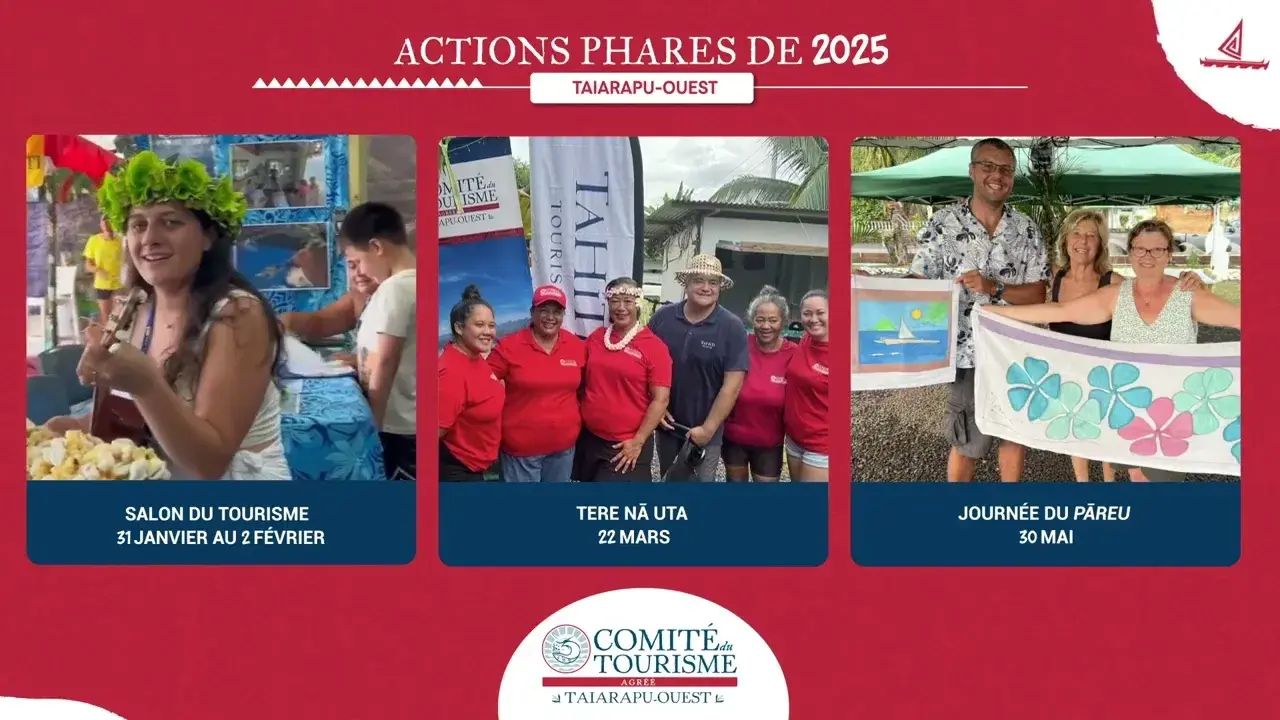
Report on the 2025 actions of the tourist boards
Comités du Tourisme - Bilan des Actions 2025

Contact

You can contact the team in charge of Tahiti Tourisme’s Tourist Committees:

  • by e-mail at comites@tahititourisme.org
  • by telephone on 40 50 57 35
  • Gare maritime – 2nd floor – BP 65, 98713 Papeete – Tahiti – French Polynesia