©

P2 Tetiaroa Tahiti Tourisme Tetiaroa Glb 3 65 Gregoire Le Bacon 4344x2896 1

A dish, a talent, a training course

Tahiti Tourisme unveils its international awareness-raising campaign: a series of videos entitled “En route vers un tourisme inclusif et durable à Tahiti Et Ses Îles” (“Towards inclusive and sustainable tourism in Tahiti and its Islands“), featuring testimonials from tourism professionals explaining the FM27 strategy and the vision of sustainable tourism.

Published on 9 February 2026

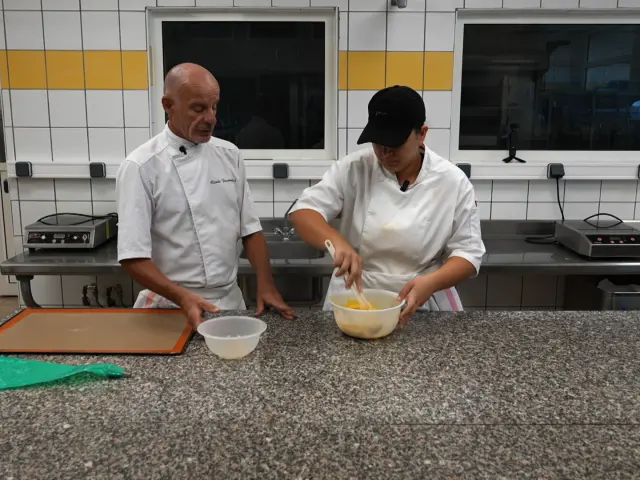
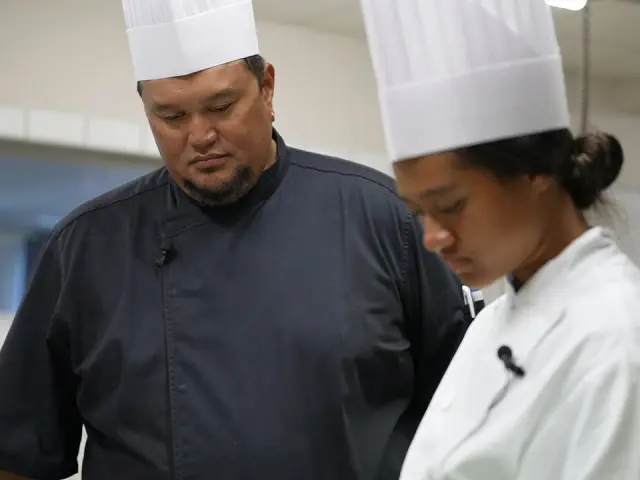
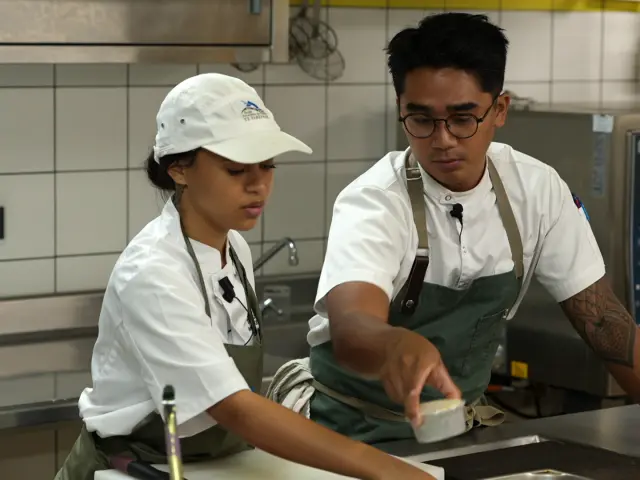
Tahiti Tourisme is co-producingUn Plat, Un Talent, Une Formation with the Campus des Métiers et des Qualifications du Pacifique.

The aim of this programme is to showcase young Polynesian talent, dishes inspired by local produce and training courses offered in French Polynesia that are accessible to young people.

A weekly television programmeto be seen on Tahiti Nui Télévision (TNTV) and Polynésie 1ère.

The format

Un Plat, Un Talent, Une Formation presents 15 episodes, each 13 minutes long, in three sections:

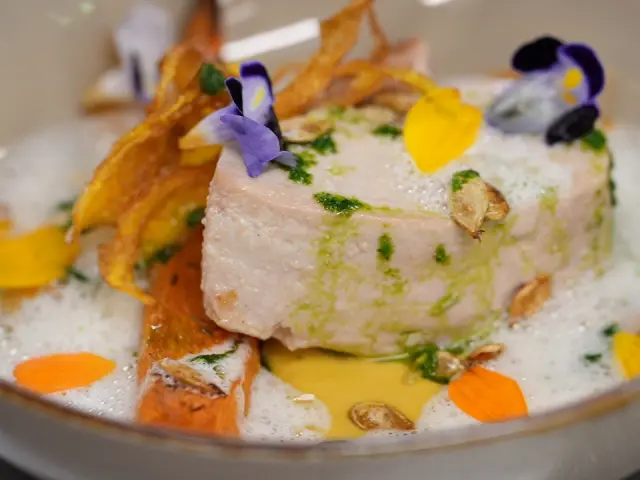
  • The dish – it showcases local produce in sometimes unusual but always gourmet ways. This section also aims to encourage Polynesians to buy local and encourage local trade.
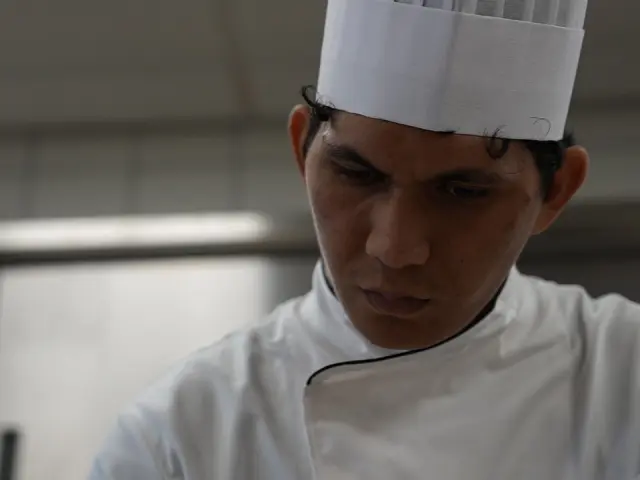
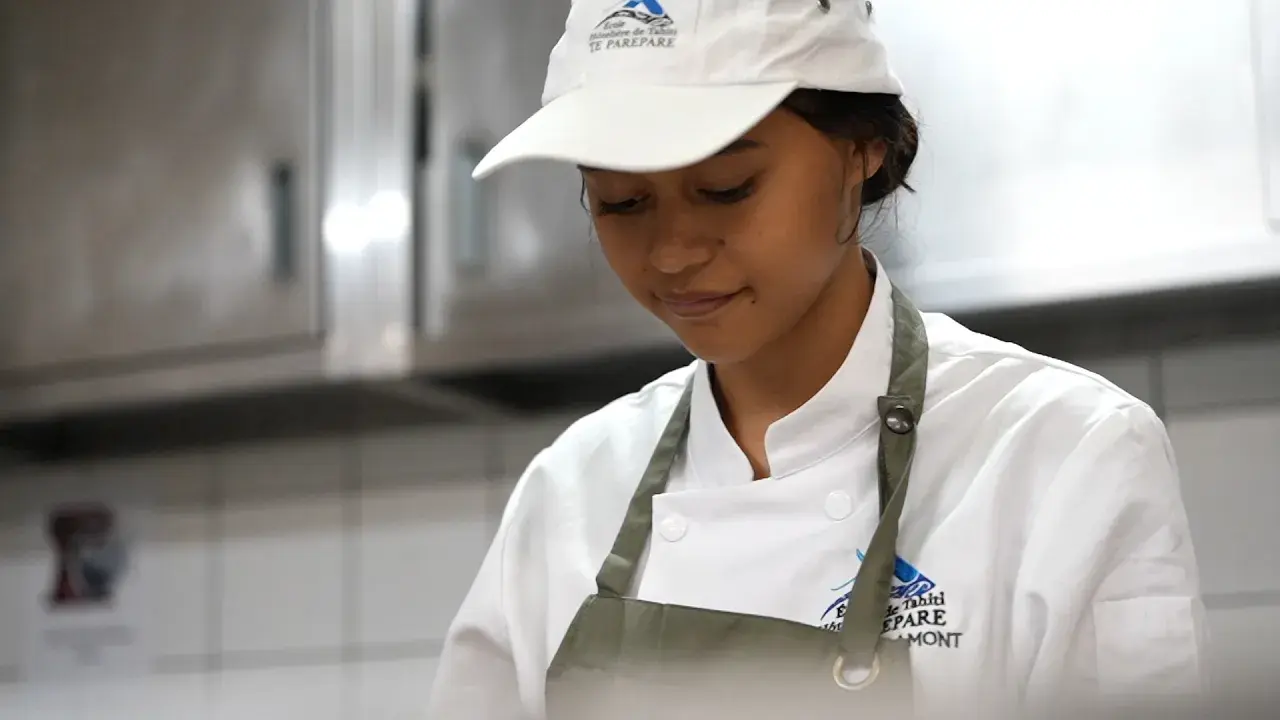
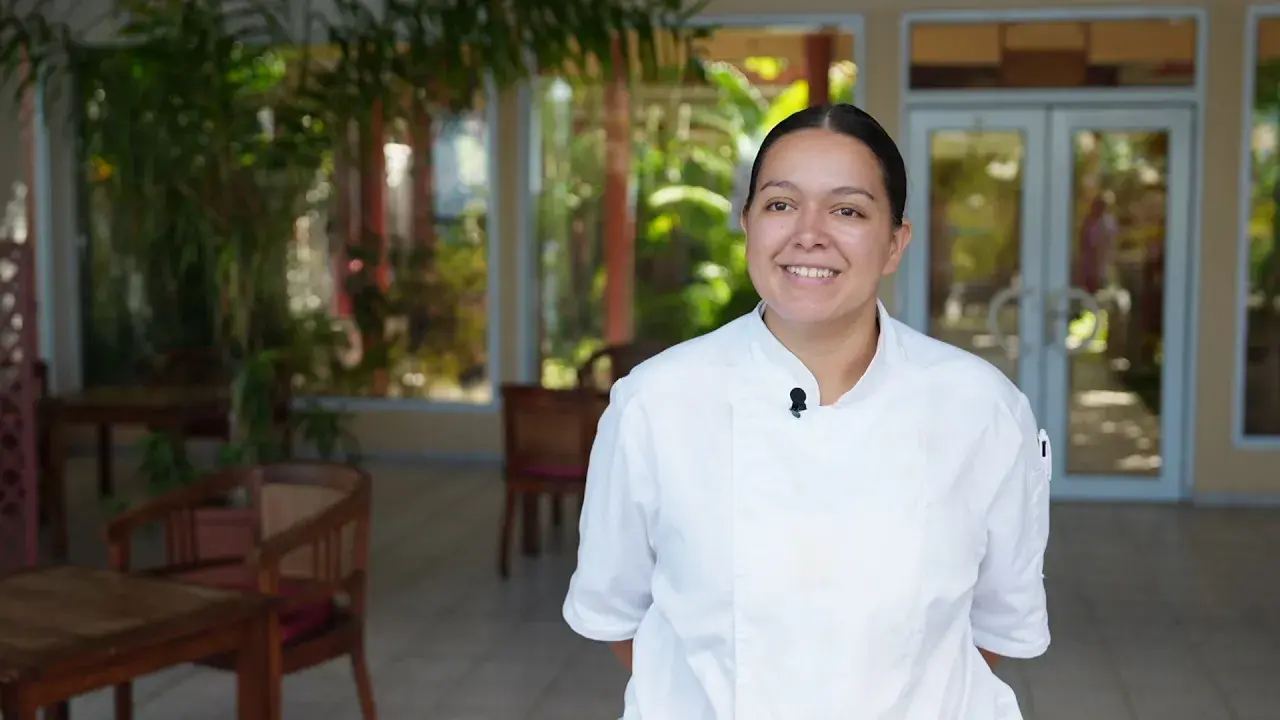
  • The talent – a young talent talks about his training, his dreams and what motivates him on a daily basis to complete his apprenticeship.
  • Training – provided in Tahiti Et Ses Îles, it is accessible to young Polynesians. The aim of this section is to show the diversity of training available in Fenua so that young Polynesians can stay and study and work in our islands.

Weekly programme over 13 weeks – Available on TNTV & Polynésie la 1ère

All courses

Find below each training course presented in the programme Un Plat, Un Talent, Une Formation and given in French Polynesia.

  • STHR technical baccalaureate in hotel and catering science and technology

    Type of training: National diploma or state diploma
    Type of training: Technological baccalaureate

    The Science and Technology of Hospitality and Catering (STHR) technological baccalaureate is aimed at students wishing to work in the catering, reception, accommodation and hotel management professions.

    This series of technological baccalaureate is chosen at the end of 3e, as the specific training begins in 2nde. In this specific seconde class, pupils discover the sector in all its diversity. These courses are divided into three areas: hotel management, catering and service.

    The STHR technological baccalaureate consists of courses common to all series, optional courses (LVC only for this series) and specialised courses.

    The final year of the baccalauréat includes two specialised courses:

    • culinary and service sciences and technologies; food and environmental science (ESAE) (13h),
    • hotel economics and management (5 hours)

    Find out more HERE

  • BTS in hotel and catering management option B management of culinary production unit (MHR)

    Length of course: 2 years
    Type of training: National diploma or state diploma
    Final level of studies: Bac + 2
    Type of course: BTS (Higher Technician Certificate)

    The BTS in hotel and catering management is available in three options, each preparing students for a specific career. Common to all students, the 1st year focuses on the fundamentals of cooking, service and accommodation. The aim is to acquire all-round skills. A significant part is devoted to food hygiene and conservation rules, stock management, basic culinary techniques, and customer reception and service. General lessons applied to the hotel and restaurant industry are also included in the programme: notions of human resources, law and accounting are integrated into a course on entrepreneurship and running a hotel business. Adapting to new customer consumption patterns and digitalization is covered in management and marketing, as is team management. Finally, two foreign languages, including English, are taught.

    The culinary production unit management option aims to master culinary techniques specific to different types of catering (traditional, gastronomic, collective) and to optimise food purchases according to parameters such as the weather. Brigade management and business management also play an important role.

    Find out more HERE
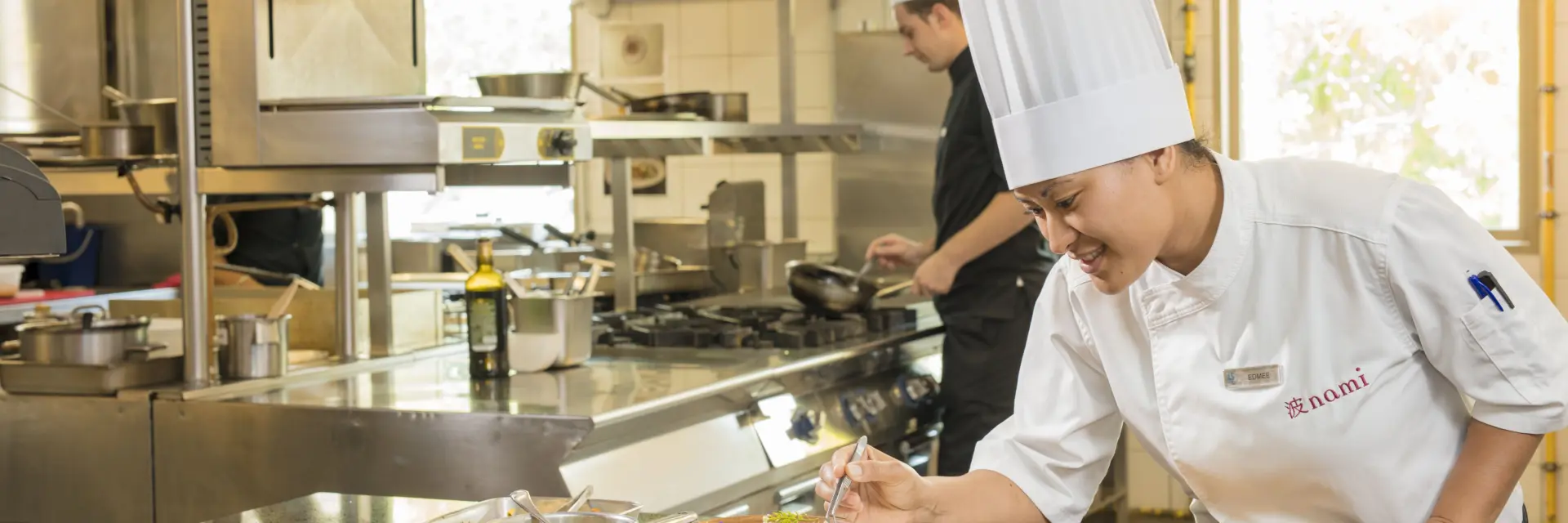
  • CS restaurant dessert

    Length of course: 1 year
    Type of training: National diploma or state diploma
    Final level of studies: CAP or equivalent + 1 year
    Type of training : CS (National Education Certificate of Specialisation)

    This CS enables students to specialise in making restaurant desserts as part of a kitchen team. From choosing ingredients to making viennoiseries, savoury and sweet petits fours, entremets, pastries and ice creams, students learn to master the entire production process. They are trained in purchasing, receiving, storage, quality control, hygiene and safety, as well as using the necessary equipment and tools.

    Find out more HERE
  • CS Boutique Pastry

    Length of course: 1 year
    Type of training: National diploma or state diploma
    Final level of studies: CAP or equivalent + 1 year
    Type of training: CS (National Education Certificate of Specialisation)

    This CS reinforces the specialisation, adaptability and responsibility of CAP holders. It gives access to a post as a specialised worker in a pastry laboratory.

    Students learn to produce boutique pastries independently. They are trained to make basic preparations, assemblies and finishes, using the most appropriate raw materials and techniques. In this way, they develop their artistic and creative sense and are able to respond to exceptional orders.

    Holders of this diploma are able to organise and monitor their production and promote it to shop sales staff.

    Find out more HERE

All recipes

Find out more about each of the recipes featured in Un Plat, Un Talent, Une Formation below.

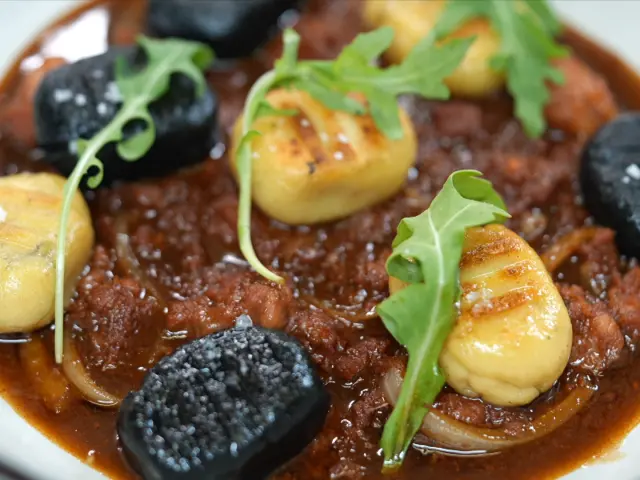
  • Uru Pua'atoro revisited in the form of stew and gnocchi

    STEP 1: Two-tone ‘uru gnocchi

    Ingredients:

    • 500gr ‘uru
    • 10gr salt
    • 100gr flour
    • 35gr cornflour
    • 60gr eggs
    • 30gr egg yolks
    • charcoal to taste
    1. Cook the uru over the heat and then cool completely before removing the skin.
    2. Blend the uru into a powder.
    3. Combine all the ingredients to make a gnocchi dough. Divide in half and mix one part with the vegetable charcoal.
    4. Shape into 10g gnocchi.
    5. Poach in simmering water then cool in ice. Pat dry with kitchen roll.
    6. Sauté each side of the gnocchi in oil and butter to colour them with a clove of crushed garlic.

    * * *

    STEP 2: Pua’atoro stew

    Ingredients

    • 2 tins of pua’atoro
    • 300gr onion
    • 3 cloves of garlic
    • turmeric
    • ginger
    • veal stock
    1. Peel the vegetables and remove the fat from the Puatoro.
    2. Make a veal stock or rehydrate a veal stock cube and reduce.
    3. Finely chop the onion, garlic, turmeric and ginger.
    4. Make the Puatoro stew: sauté the onion, garlic, ginger and turmeric, add the defatted Puatoro and cook for a few moments. Add the reduced veal stock and simmer until ready to serve.
    5. Adjust the seasoning.
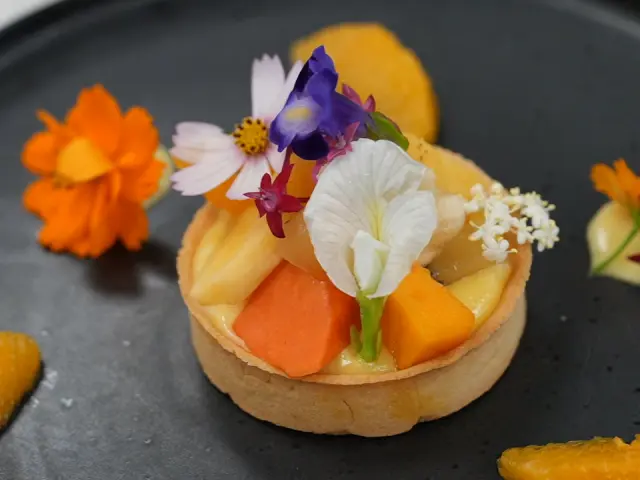
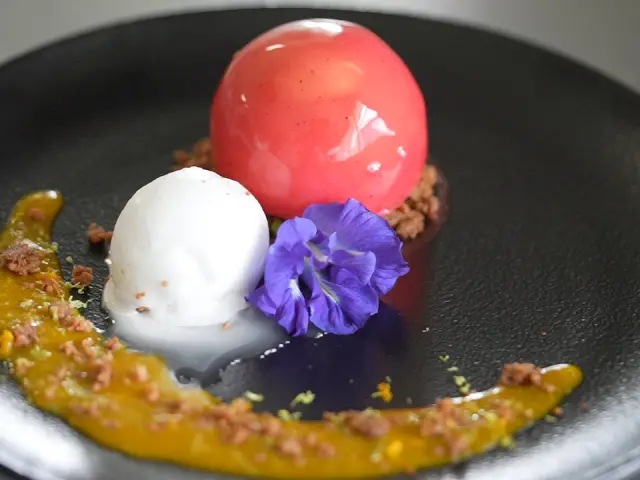
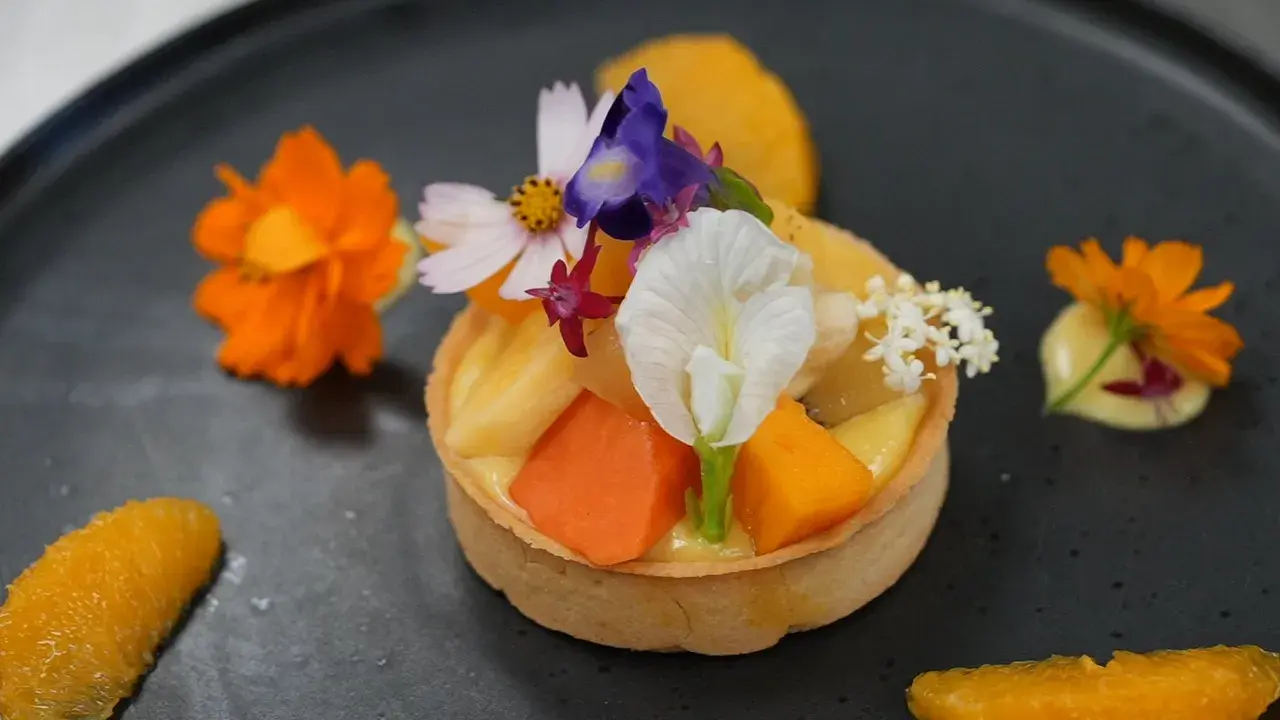
  • Citrus tartlet with fenua fruit and flowers

    STEP 1: Lemon shortbread tartlet

    Ingredients

    • 500gr flour
    • 150gr icing sugar
    • 250gr butter
    • 2 eggs
    • 2 lemons
    1. Mix the flour, icing sugar and zest of the two lemons.
    2. Add the butter in small pieces and sand quickly.
    3. Add the eggs. Mince quickly. Set aside.
    4. Roll out between two rulers. Cut out with a cookie cutter. Chill in a cool place. Bake at 180°c.

    * * *

    STEP 2: Lemon curd

    Ingredients

      • 12 lemons
      • 600gr sugar
      • 12 eggs
      • 80g maizena
      • 320g butter
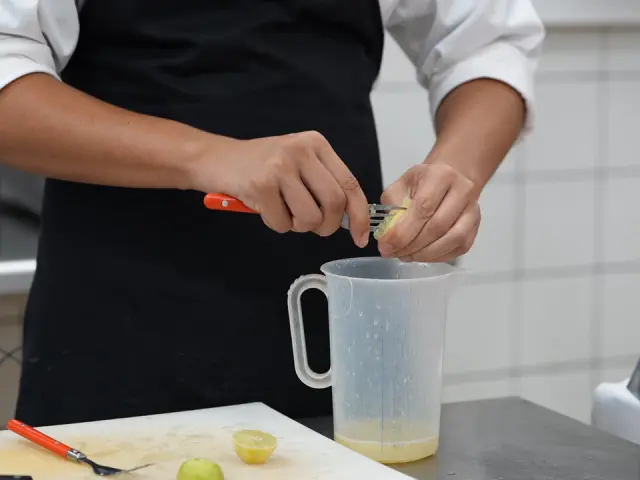
      1. Wash and zest the lemons. Squeeze the juice.
      2. Blanch the sugar and eggs.
      3. Heat lemon juice + zest + cornflour. Add the eggs and sugar. Bring to the boil while whisking.
      4. Remove. Cool. Add the butter in cold pieces. Add the grapefruit zest, orange zest and Combava. Strain on contact. Set aside

      * * *

      STEP 3: Seasonal fruit

      Ingredients

        • 1 papaya
        • 2 grapefruits
        • 3 pineapples
        • 2 guavas
        • 4 mangoes
        • 2 star fruit
        1. Cut the fruit into different shapes. Arrange harmoniously on the tarts topped with lemon curd.
          The tarts will be decorated with edible flowers as they become available. The dessert will be accompanied by a Mahana herbal tea.
      • Mango and passion fruit cake

        STEP 1: Crackers

        Ingredients

          • 60gr butter
          • 75gr brown sugar
          • 75gr flour
          1. Blanch the butter and brown sugar.
          2. Add the flour.
          3. Roll out into two sheets 2 minutes thick, set aside in a cool place and cut into discs slightly larger than the choux.

          * * *

          STEP 2: Choux pastry

          Ingredients

          • 250gr water
          • 100gr butter
          • 5gr salt
          • 150gr flour
          • 4 to 5 eggs
          1. To make the choux pastry: Bring the water, salt and butter to the boil.
          2. Remove from the heat and add the flour. Return to the heat and dry the pastry well.
          3. Pour into a bowl and add the eggs one at a time.
          4. Arrange the puff pastry and place a disc of cracker on each puff.
          5. Bake at 170°c (approx. 35 mins.).

          * * *

          STEP 3 : Pastry cream

          Ingredients

            • 250gr mango purée
            • 180gr passion fruit purée
            • 100gr egg yolk
            • 100gr sugar
            • 45g cream powder
            • 30g butter
            • 65gr whipped cream
            1. Make the crème pâtissière: Boil the purées, meanwhile mix the cream powder and sugar, add the yolks and whisk well.
            2. Mix everything together and cook the cream for 1 minute after boiling. Add the butter and smooth.
            3. Remove to a cling film tray and cool in a cell.
            4. Gently fold in the whipped cream.
            5. Garnish the nuns

            * * *

            STEP 4 : Finishing

            Ingredients :

              • 300gr fondant
              • orange colouring
              • coconut
              1. Glaze the nuns: Heat the fondant to 40°C in the microwave or in a saucepan over a low heat.

            All episodes

            Episode 1
            EP1 - Uru Pua'atoro revisité sous forme de ragoût et de gnocchis
            Episode 2
            EP2 - Tartelette aux fruits et fleurs du fenua
            Episode 3
            EP3 - Religieuse mangue passion

            Our other awareness campaigns